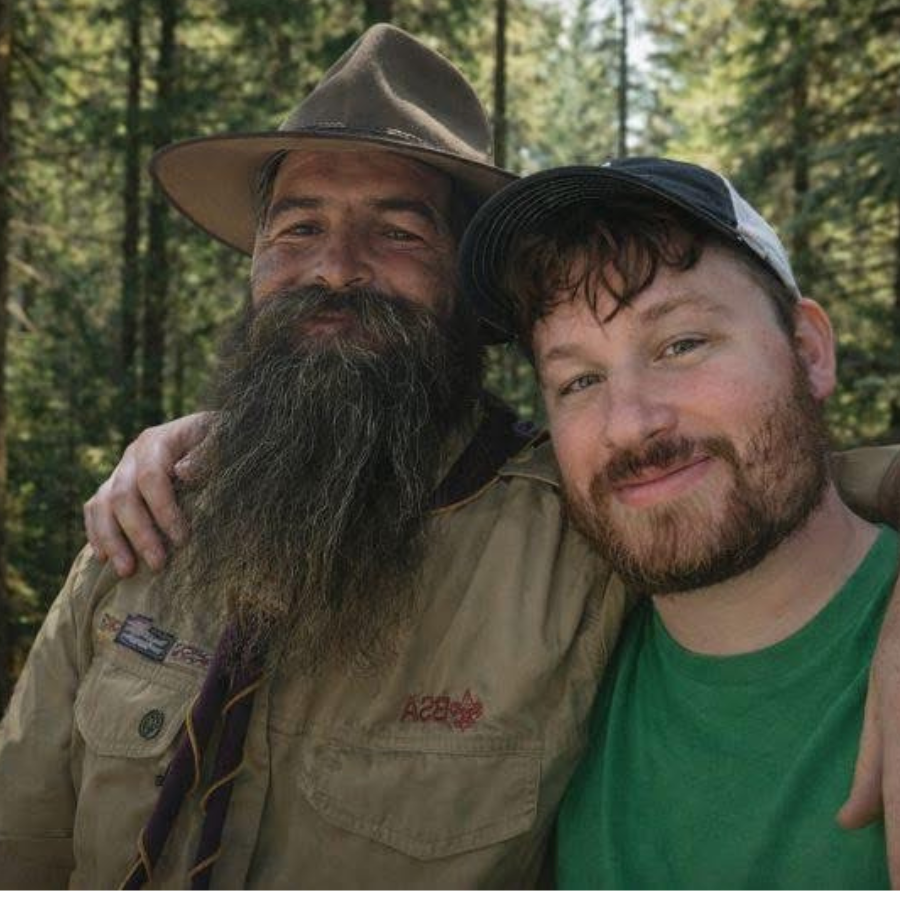
Episode 51

A Tribute to Johnny

with Stephen & Calvin

What does it mean when a stranger who understands your cancer journey becomes family?

Stephen, a brain cancer survivor, and his husband and caregiver, Calvin, share a deeply moving story about diagnosis, fear, friendship, and the unexpected gift of human connection. After Stephen experienced a seizure at work, doctors discovered a brain tumor that changed the course of their lives. Through the support of family, coworkers, faith, and the CanCare community, Stephen was matched with Johnny, a fellow brain cancer survivor who quickly became far more than a mentor.

What started as peer support turned into a daily brotherhood built on honesty, humor, and shared understanding. Johnny helped Stephen see himself as a survivor and reminded him that life was still meant to be lived fully. Calvin opens up about the caregiver role, the helplessness that can come with it, and how Johnny filled a gap no medical treatment could reach. Together, they reflect on grief, resilience, and the kind of connection that leaves a permanent mark on your life.

This conversation is a tribute to Johnny’s legacy and a reminder that even in the hardest seasons, people can show up with extraordinary love, hope, and compassion.

Highlights:

1. Discover how shared lived experience can create healing in ways medical care alone cannot.

2. Learn why caregivers often carry emotions differently while still becoming a steady source of strength.

3. Hear how humor, honesty, and everyday conversations became part of surviving brain cancer.

4. Explore how support systems from family, coworkers, faith, and community can shape recovery and resilience.

5. Understand why opening yourself to connection during hardship can change the entire cancer journey.

Mentioned Resources:

CanCare- www.cancare.org

About the Guest:

Stephen Hudson is a brain cancer survivor, devoted husband, and living testament to the power of human connection. When his diagnosis turned his world upside down, he leaned on his faith, his family, and ultimately a friendship that would change his life. Through CanCare, Stephen was matched with volunteer Johnny Parry, a fellow survivor who walked beside him with understanding, steadiness, and a brotherhood that became one of the most meaningful relationships of his journey. Sadly, Johnny passed away late last year. Stephen made the courageous choice to continue with this episode to honor Johnny's life and legacy. Calvin, Stephen's husband and caregiver, has been present through every moment of this journey and is here to share his heart as well.


Explore other Podcast Episodes

Ep 59

Talking to Your Kids About Cancer

with Becca Schuetz
Becca Schuetz is a certified child life specialist and founder of Coping Solutions. With more than a decade of experience in pediatric and adult oncology, she helps families talk about cancer, treatment, grief, and change in ways children can understand. Her work is rooted in child development, honest communication, emotional safety, and family support. Becca’s path began with her own childhood health issues. She remembers wishing her family had someone to explain what was happening and help them cope. Later, an internship with Camp Sunshine showed her how much support families facing childhood cancer need. That experience shaped her focus on oncology and child life care. Becca explains why children often cope better when parents use clear, age-appropriate language. She shares how conversations should change for toddlers, school-age children, and teens. Parents will also hear practical ways to prepare kids for treatment, respond when they shut down, maintain helpful routines, and make space for grief. Her message for parents is simple. You don’t need perfect words. Keep showing up, keep communication open, and start where you are. Children need honesty, consistency, connection, and the reassurance that they will be cared for. Highlights:  How children process cancer at different ages Age-appropriate ways to explain cancer.  What children may be saying without words How behavior can reveal what they’re feeling.  How to create emotional safety at home Why naming feelings helps kids cope.  Ways to preserve stability during treatment How routines and connection build security.  Why parents need support too How child life and peer support can help. Mentioned Resources: CanCare- www.cancare.org Becca’s website – https://www.copingsolutionsllc.com About the Guest: Becca Schuetz is a Certified Child Life Specialist, a guide for grieving kids, and a believer in families' capacity to endure. For more than a decade, she worked inside two of the country's leading hospital systems, Children's Healthcare of Atlanta and Emory Healthcare, walking beside families in pediatric and adult oncology through diagnosis, treatment, and everything in between. She brings that experience to her private practice, Coping Solutions, where she helps children of all ages face loss, fear, and change in ways that are developmentally honest and emotionally safe. Becca shares what children actually understand about illness and death, how adults get it wrong with the best intentions, and why the hardest seasons are meant to be walked together.
Ep 58

Community is Medicine

with Loki Villaseñor
How can community, creativity, and support help someone keep moving forward after cancer treatment ends? Loki Villaseñor is a father of eight, health and safety professional, writer, and head and neck cancer survivor. After finding a lump on his neck in early 2025, Loki was diagnosed with HPV-positive head and neck cancer and faced seven weeks of chemotherapy and radiation. Treatment brought pain, exhaustion, feeding challenges, and emotional strain. It also changed the way Loki saw support. Through the Memorial Hermann Canopy Cancer Survivorship Center in The Woodlands, Texas, he found free programs for survivors and families, including men’s lunches, a working professional’s support group, counseling resources for his children, and virtual classes. What began as something he thought might help his family became a source of community and healing for him too. Loki also turned to writing, creativity, gratitude, faith, and service as tools for processing life after treatment. His experience taught him that progress is not always uphill and that healing can continue long after treatment is complete. His message is simple: you do not have to climb alone. Support, connection, and hope can help you take the next step. Even small steps can carry you forward each day. Highlights:  Why emotional recovery may continue long after cancer treatment officially ends. The value of finding people who understand cancer without needing every feeling explained.  Ways creativity and writing can help give grief, gratitude, and change a place to go.  How survivorship programs can support not only the person with cancer, but their family too.  Why accepting help and helping others can become part of moving forward. Memorial Hermann Canopy Cancer Survivorship Center A key part of Loki’s story is the support he found through Memorial Hermann Canopy Cancer Survivorship Center in The Woodlands, Texas. Loki first thought its services would be most helpful for his wife and children. He later found a community that supported his own life after treatment. He participated in men’s lunches, a working professionals cancer support group, Voices of Hope, and an online Spanish class. His children also received access to counseling support. Loki describes Canopy as a place where he could be heard without feeling like a burden or having to explain every part of his cancer experience. Mentioned Resources: CanCare- www.cancare.org About the Guest: Loki Villaseñor is a head and neck cancer survivor, father of eight, health and safety professional and a writer. In January 2025, he found a lump on his neck. Along the way, he found support through programs at Memorial Hermann's Canopy Survivorship Center and turned to writing and drawing as a creative outlet for healing. Today he is cancer-free and often connects with other survivors to help them through their own journeys.